

In today’s fast-paced digital landscape of 2026, businesses are constantly evolving to keep up with changing technologies, AI integration, user preferences, and competitive pressures. One key element that plays a crucial role in shaping and refining modern applications is understanding the role of customer feedback in improving digital products. As more businesses adopt digital solutions, understanding how users interact with products becomes a top priority for product managers and developers alike.
The role of customer feedback in improving digital products serves as a powerful catalyst for driving continuous innovation, enhancing user experience (UX), and ensuring long-term market success. In this updated guide for 2026, we’ll explore the role of customer feedback in improving digital products, highlighting its modern benefits and how tech-driven companies can effectively gather and convert user insights into impactful features.
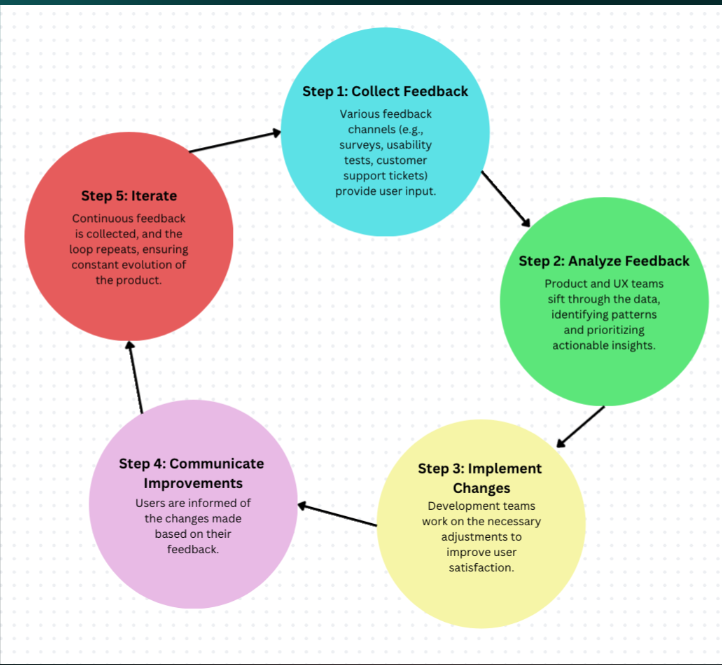
1. Understanding the Needs and Preferences of Modern Users
At the heart of every successful SaaS platform, mobile app, or online service lies an in-depth understanding of the target audience. Recognizing the role of customer feedback in improving digital products provides invaluable insights into user preferences, friction points, and emerging needs. Rather than guessing what features users might want, direct insights allow product teams to develop data-backed solutions.
For instance, if user telemetry or reviews reveal that a newly launched module is confusing, teams can immediately prioritize a redesign. To build high-performing products, you should explore. Recognizing the role of customer feedback in improving digital products ensures that positive feedback highlights what works, enabling businesses to expand upon proven features.
2026 Actionable Insight: Use automated in-app micro-surveys, video session replays, and AI sentiment analysis tools to capture real-time user voices alongside quantitative analytics.
2. Identifying Bugs and Issues Early
No matter how meticulously software is developed or tested, technical glitches and bugs are inevitable in complex modern builds. Here, the role of customer feedback in improving digital products becomes critical for rapid issue resolution. End-users often encounter unique real-world edge cases before internal QA teams do.
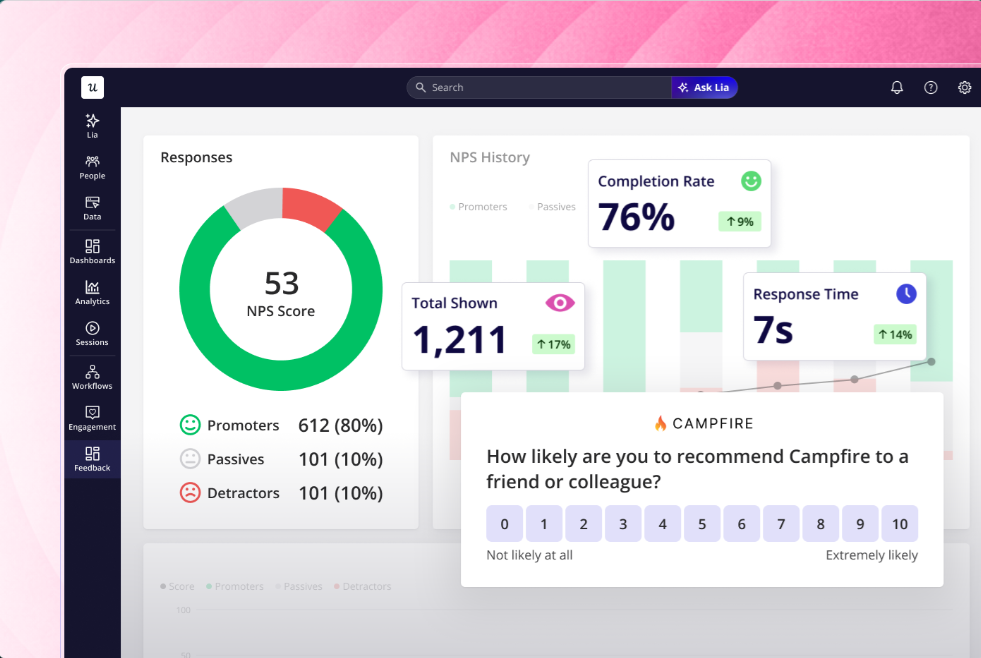
Collecting real-time reports regarding performance degradation or UI bugs allows technical teams to respond swiftly. To understand industry standards on product quality, read Emphasizing the role of customer feedback in improving digital products helps build long-term user trust, as customers appreciate seeing their reported issues fixed promptly in regular update releases.
2026 Actionable Insight: Implement continuous automated bug-reporting widgets directly inside your UI with clear severity tags to speed up developer triage.
3. Data-Driven Feature Prioritization
Deciding which features to build next can be overwhelming for product managers managing tight sprint cycles. Understanding the role of customer feedback in improving digital products brings clarity to roadmap planning by providing hard user evidence over subjective assumptions.
Rather than relying on internal guesses, leveraging the role of customer feedback in improving digital products ensures that new feature rollouts closely align with genuine user demand. This data-backed strategy directly increases adoption rates and minimizes wasted development resources.
2026 Actionable Insight: Implement public or private feature-voting boards (e.g., Canny or Upvoty) where users can submit and upvote their desired functionalities.
4. Elevating UX and UI Design Standard
User Experience (UX) and User Interface (UI) design standards in 2026 demand hyper-personalization and accessibility. If a digital tool is visually appealing but unintuitive, adoption rapidly plummets. This reinforces the role of customer feedback in improving digital products across design workflows.

Qualitative user responses highlight navigation blockers and usability bottlenecks. For deeper insights on design systems, check Analyzing the role of customer feedback in improving digital products enables designers to create seamless, intuitive journeys across mobile and desktop environments.
2026 Actionable Insight: Run bi-weekly usability testing sessions using session recording tools and AI heatmaps to identify user drop-off points automatically.
5. Building Customer Loyalty and Brand Trust
When users realize their voices influence product updates, brand loyalty increases significantly. Actively acknowledging the role of customer feedback in improving digital products fosters authentic community trust.
Consistently demonstrating the role of customer feedback in improving digital products transforms everyday users into enthusiastic brand advocates who willingly recommend your solution across social channels.
2026 Actionable Insight: Publish transparent product update changelogs and release notes that publicly credit user feedback for specific feature additions.
6. Driving AI-Powered Product Innovation
Innovation doesn’t strictly originate within internal brainstorming sessions. Often, end-users reveal unique workarounds and unconventional use cases. Appreciating the role of customer feedback in improving digital products unlocks fresh perspectives and inspires breakthrough concepts.

Integrating crowdsourced ideas helps businesses maintain an innovative product pipeline. Explore more about digital transformation at Ultimately, the role of customer feedback in improving digital products ensures that product innovations solve genuine real-world challenges.
2026 Actionable Insight: Establish dedicated user co-creation groups or beta testing communities to test experimental AI features before full public releases.
7. Maintaining a Competitive Advantage in 2026
In an automated and highly competitive digital market, software products must evolve continuously to stay relevant. Fast-growing brands recognize the role of customer feedback in improving digital products as their primary competitive differentiator.
Monitoring feedback alongside broader market shifts allows software vendors to pivot quickly before competitors capture market share. Leveraging the role of customer feedback in improving digital products keeps your offering aligned with dynamic industry demands.
2026 Actionable Insight: Use automated social listening and review monitoring tools to track user sentiment across platforms like G2, Capterra, and Trustpilot.
8. Enhancing Self-Service Support and Documentation
User feedback frequently exposes documentation gaps and support bottlenecks. When users consistently ask similar support questions, it signals that self-service help resources require updating.
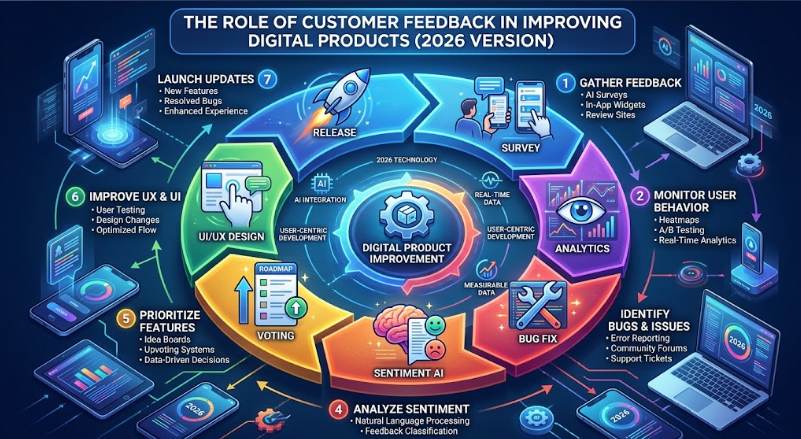
Tracking input regarding knowledge base articles highlights where instructions are unclear. To optimize support infrastructure, visit Recognizing the role of customer feedback in improving digital products ensures support documentation evolves alongside product updates.
2026 Actionable Insight: Convert high-frequency customer queries into dynamic, AI-assisted FAQ knowledge bases and interactive video walkthroughs.
Conclusion
Understanding and executing the role of customer feedback in improving digital products remains one of the most effective strategies for software growth in 2026. From resolving bugs to prioritizing complex feature roadmaps, user feedback provides the clarity necessary to build resilient, market-leading solutions.
By maintaining an agile, transparent, and continuous feedback system, digital brands can maximize customer retention, spur continuous innovation, and systematically outperform competitors in an evolving digital ecosystem.