


Finding the right software, course, SaaS platform, or digital tool in 2026 can feel overwhelming. With artificial intelligence integrated into almost every solution, learning how to choose the best digital product for your needs has become a critical skill for individuals, freelancers, and businesses alike.
Whether you need productivity software, creative tools, or enterprise systems, making an informed choice prevents wasted budget and subscription fatigue. This comprehensive guide walks you through a structured, step-by-step strategy on how to choose the best digital product for your needs in today’s fast-moving market.
Understanding the 2026 Digital Product Landscape
The digital marketplace has evolved rapidly over the past few years. Subscription models, cloud-native architectures, and generative AI features are now standard. To succeed, you must understand how modern digital solutions operate before making a purchase.
When evaluating options, knowing how to choose the best digital product for your needs requires analyzing both technical capabilities and financial models.
AI-Powered Personalization and Automation
In 2026, static digital products are almost obsolete. Modern solutions leverage machine learning to adapt to user behavior, automate repetitive workflows, and deliver personalized user experiences. When assessing software, consider whether these automated workflows add genuine value or merely increase complexity.
The Rise of Flexible Licensing Models
From micro-subscriptions and pay-as-you-go API credits to traditional SaaS, pricing structures vary widely. Understanding these pricing mechanisms is a fundamental pillar of learning how to choose the best digital product for your needs without incurring unexpected costs.
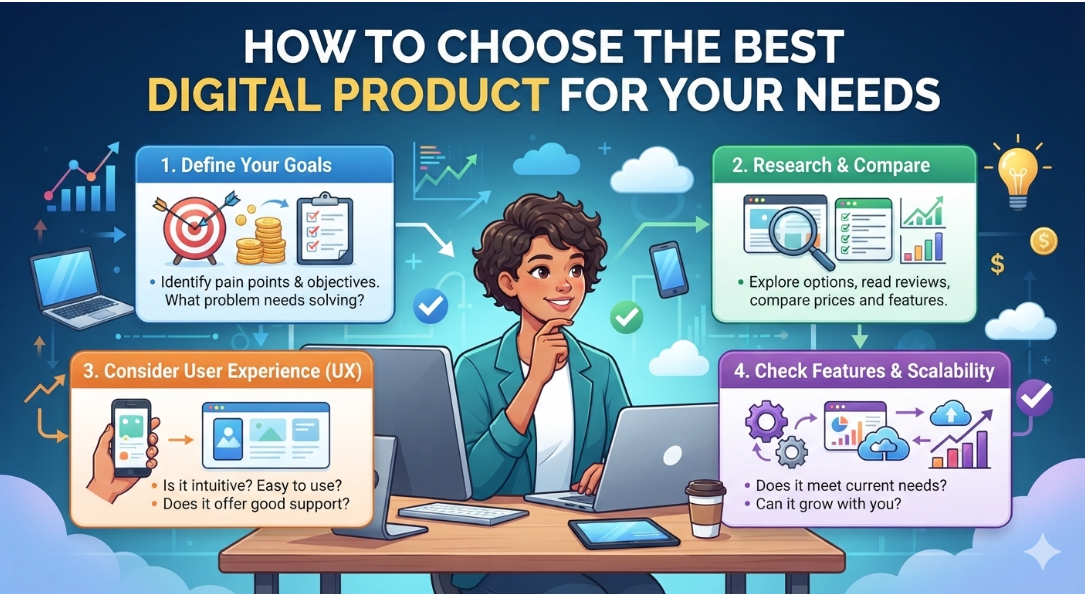
Before browsing software marketplaces or reading reviews, clarify what problem you are trying to solve. Skipping this step often leads to buying overly complex tools with features you will never use.
Define Your Specific Goals and Pain Points
Before browsing software marketplaces or reading reviews, clarify what problem you are trying to solve. Skipping this step often leads to buying overly complex tools with features you will never use.
Identify Immediate vs. Long-Term Requirements
Ask yourself what you need the product to accomplish today versus twelve months from now. A tool that satisfies your current needs but cannot scale will force an expensive migration later.
Differentiate Between “Must-Have” and “Nice-to-Have” Features
- Must-Have Features: Core functionalities required to solve your main problem.
- Nice-to-Have Features: Extras that add convenience but are not essential.
Keeping this distinction clear is central when deciding how to choose the best digital product for your needs efficiently.
Essential Criteria for Evaluating Digital Product
Once your goals are defined, evaluate candidate products using standardized criteria. Mastering how to choose the best digital product for your needs involves examining these core factors:
| Evaluation Factor | Key Question to Ask | Benchmark Standard (2026) |
| Usability | Can your team adopt it quickly? | Minimal onboarding required |
| Integration | Does it sync with existing stack? | Native REST APIs & Webhooks |
| Security | Is data protected end-to-end? | SOC 2 Type II, GDPR, CCPA |
| Scalability | Can it handle higher volume? | Elastic tiers without migration |
User Experience and Onboarding Friction
A product with powerful features is useless if the user interface is confusing. Prioritize tools that offer intuitive navigation, clear documentation, and guided walkthroughs.
Ecosystem Integration and Interoperability
Your new purchase must connect seamlessly with your existing stack—such as cloud storage, team communication tools, or CRM systems. Checking for native integrations or robust API support is key when researching how to choose the best digital product for your needs.
Researching Reviews, Case Studies, and Peer Feedback
Third-party validation helps you look past promotional marketing claims. Gathering objective user feedback is a reliable method on how to choose the best digital product for your needs.

Navigating Independent Review Platforms
Rely on trusted verification platforms rather than testimonials hosted directly on the vendor’s website. Pay close attention to negative reviews that mention recurring bugs, hidden fees, or poor customer support.
Assessing Customer Support Responsiveness
Test vendor responsiveness before purchasing. Send a technical question to support during your trial period to evaluate response speed, helpfulness, and channel availability (live chat, phone, or ticketing).
Cost Structure and ROI Analysis
A low upfront price can be deceiving if long-term maintenance or add-on modules are expensive. Calculating total cost of ownership (TCO) is crucial when determining how to choose the best digital product for your needs.
Uncovering Hidden Expenses
Watch out for common hidden costs:
- Implementation and setup fees
- Data export or storage overage charges
- Mandatory training or premium support add-ons
- Per-user seat price escalations at renewal
Calculating Expected Return on Investment (ROI)
Compare total annual costs against expected benefits—such as hours saved per week, error reduction, or direct revenue generation. Understanding this math reinforces how to choose the best digital product for your needs with financial confidence.
Hands-On Testing and Trial Utilization
Never buy a major digital product without testing it first. Hands-on testing provides insights that marketing pages cannot duplicate.
Structuring a Successful Free Trial
Treat a free trial like a mini-project:
- Import realistic test data.
- Execute primary daily tasks.
- Involve actual end-users in testing.
- Note performance bottlenecks or unexpected glitches.
Knowing how to choose the best digital product for your needs through real-world trial runs prevents buyer’s remorse after signing a contract.
Security, Compliance, and Data Ownership
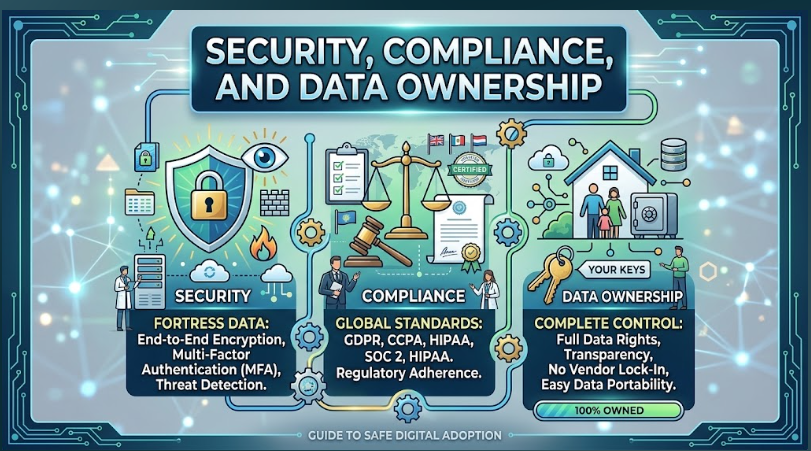
Data breaches and compliance violations carry steep penalties. A critical aspect of how to choose the best digital product for your needs is verifying data security and ownership terms.
Data Ownership and Portability
Ensure you retain full ownership of your data and can export it anytime in standard formats (CSV, JSON, SQL). Avoid vendor lock-in where retrieving your data requires custom engineering or penalty fees.
Compliance Standards
Verify vendor compliance with relevant regulatory standards based on your region and industry:
Final Selection and Implementation Strategy
After completing research, trials, and security vetting, select your final tool and plan implementation.
Making the Final Decision
Review your comparison matrix. Select the option that aligns best with your core requirements, budget, and long-term goals. Understanding how to choose the best digital product for your needs ends with a decision grounded in data, not emotional appeal.
Smooth Onboarding and Rollout
- Assign an internal product champion.
- Schedule structured training sessions.
- Establish clear usage guidelines for your team.
- Track adoption metrics during the first 90 days.
Conclusion
Learning how to choose the best digital product for your needs is a repeatable process: define requirements, score candidates systematically, test thoroughly during free trials, and audit security standards. By following this framework, you can select digital products that deliver long-term value, increase efficiency, and provide a strong return on investment.
How long should I spend researching a digital product?
For personal tools or simple mobile apps, 1 to 2 hours of comparison is usually sufficient. For team-wide SaaS platforms or business tools, allocate 2 to 4 weeks for evaluation, testing, and vendor assessment.
What if a product lacks one key feature I need?
Check the vendor’s public roadmap or contact support to see if the feature is under active development. Alternatively, evaluate whether an integration tool like Zapier or Make can bridge the gap cleanly.
Is it better to choose an all-in-one suite or specialized tools?
Specialized tools typically deliver deeper functionality, whereas all-in-one suites offer convenience and lower overall cost. Weigh the depth of functionality required against the cost and complexity of managing multiple subscriptions.