

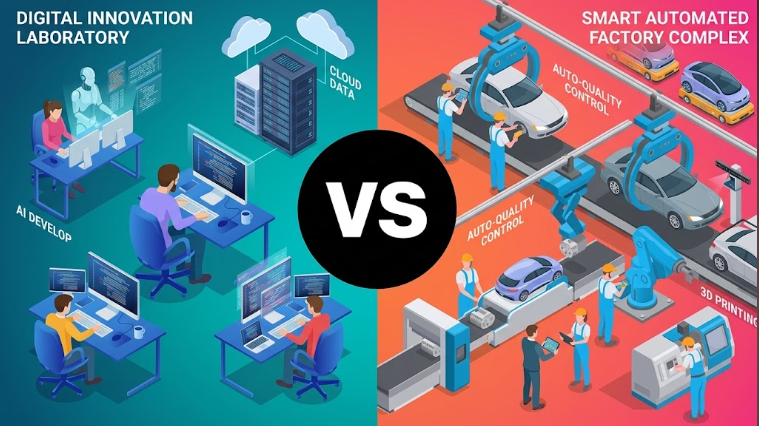
In 2026, launching an online business or expanding an existing venture requires making one critical decision early on: choosing between digital and tangible offerings. Deciding between Digital Products vs Physical Products: Which Is Right for You? shapes your operational model, upfront costs, distribution logistics, customer feedback loops, and profit potential.
With shifting economic landscapes, AI-driven workflows, and changing consumer preferences, modern entrepreneurs must evaluate both business models carefully. Whether you are aiming for passive income streams or building a traditional e-commerce brand, analyzing Digital Products vs Physical Products: Which Is Right for You? will set the foundation for your long-term success.
1. Understanding the Core Difference
Before deciding Digital Products vs Physical Products: Which Is Right for You?, it is essential to define what makes each model unique.
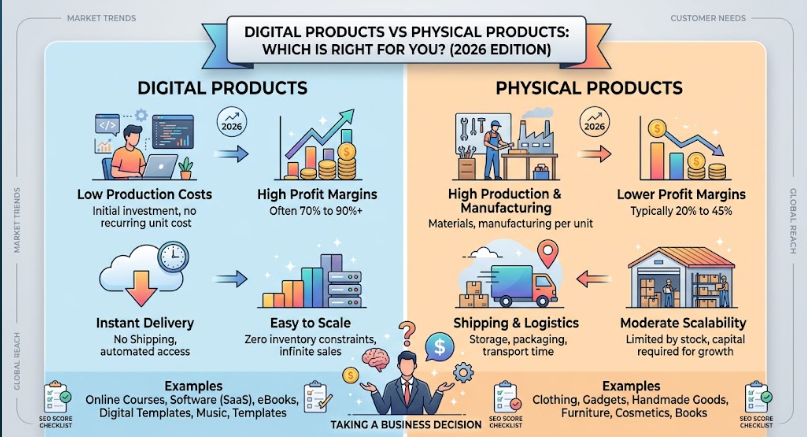
- Digital Products: Intangible assets or media that can be sold and distributed repeatedly online without needing to replenish inventory (e.g., eBooks, SaaS software, online courses, digital templates, and stock media).
- Physical Products: Tangible merchandise that requires manufacturing, storage, packaging, and shipping to reach the customer (e.g., clothing, hardware, cosmetics, home decor, and packaged foods).
When weighing Digital Products vs Physical Products: Which Is Right for You?, consider how each option aligns with your capital, technical skill, and scalable business goals in 2026.
2. Upfront Costs and Profit Margins
Financial investment is often the deciding factor when evaluating Digital Products vs Physical Products: Which Is Right for You?.
Digital Products: Low Overhead, High Profit Margins
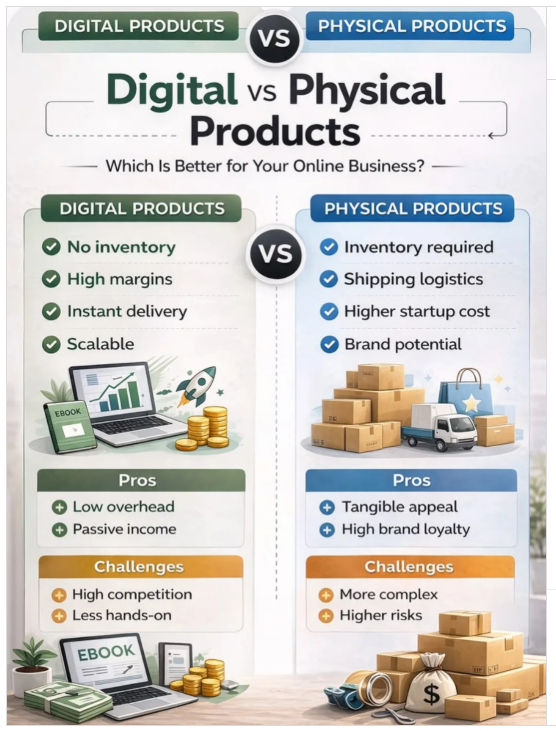
Creating a digital product usually demands high initial time or creation costs, but zero recurring unit creation costs. Once created, selling 100 units costs nearly the same as selling 10,000 units.
- Profit Margins: Often range from 70% to 90%+.
- Inventory Costs: Zero inventory storage fees.
Physical Products: High Production & Storage Costs
Physical products carry continuous costs including raw materials, manufacturing, warehousing, and shipping.
- Profit Margins: Typically range between 20% and 45%.
- Inventory Costs: Requires storage (3PL or local fulfillment) and carries risks of unsold stock.
If profit margins are your primary metric, asking Digital Products vs Physical Products: Which Is Right for You? often points strongly toward digital assets.
3. Inventory Management and Supply Chain Logistics
Supply chain disruptions have taught modern businesses to stay agile. Looking at Digital Products vs Physical Products: Which Is Right for You? through a logistical lens shows stark contrasts.
When evaluating Digital Products vs Physical Products: Which Is Right for You?, digital goods offer completely frictionless delivery, eliminating shipping delays and customs paperwork.
4. Customer Feedback and Product Improvement Loops
In today’s market, rapid iteration based on user feedback is vital. This is another crucial area when analyzing Digital Products vs Physical Products: Which Is Right for You?.
Iterating Digital Products
Updating digital offerings is fast and cost-effective. If users report a bug in a software tool or an outdated section in an online course, creators can update the file instantly for all past and future customers.
Iterating Physical Products
Modifying physical products requires changing manufacturing molds, altering materials, or re-negotiating supplier contracts. Defective inventory can lead to costly product recalls or unsellable stock.
Understanding customer feedback response time is key when determining Digital Products vs Physical Products: Which Is Right for You?.
5. Scalability and Global Reach
Scalability determines how easily your business can grow without being bottlenecked by resources.
- Scalability for Digital Goods: Highly scalable. Thousands of automated purchases can happen simultaneously without additional labor or manufacturing.
- Scalability for Physical Goods: Scaling requires ordering larger production quantities, hiring more warehouse staff, and managing increased shipping complexity.
Analyzing Digital Products vs Physical Products: Which Is Right for You? from a growth perspective shows that digital goods scale faster with lower operational friction
6. Perceived Value and Customer Trust
Despite the advantages of digital goods, physical products maintain a distinct edge when it comes to tactile trust and perceived tangible value.
- Physical Goods: Customers can touch, feel, and immediately experience physical items. This tactile nature makes it easier to establish traditional perceived value.
- Digital Goods: Because digital products cannot be physically touched, businesses must rely on strong sales copy, social proof, video previews, and risk-free guarantees to build buyer trust.
Factoring in customer trust dynamics will help clarify Digital Products vs Physical Products: Which Is Right for You?.
7. Customer Support and Returns Handling
Handling customer queries and returns operates differently in both models:
- Digital Returns: Often mitigated by free trials or preview modules. However, digital piracy and chargebacks are unique challenges.
- Physical Returns: Involves reverse logistics, return shipping costs, inspecting returned merchandise, and restocking fees.
When asking Digital Products vs Physical Products: Which Is Right for You?, ensure your customer support setup matches the operational demands of your chosen product type.
8. Summary Comparison Matrix
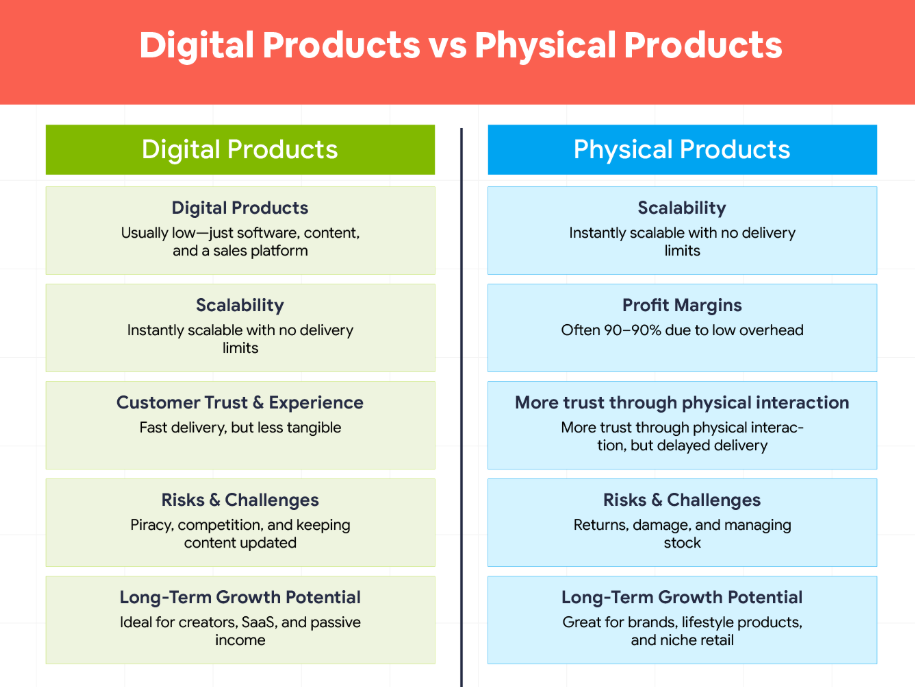
| Feature / Criteria | Digital Products | Physical Products |
| Startup Costs | Low (Development/Software) | Moderate to High (Inventory/Production) |
| Profit Margins | High (70% – 90%+) | Moderate (20% – 45%) |
| Delivery Speed | Instant Download | 1-7 Shipping Days |
| Scalability | Unlimited / Automated | Requires capital & supply chain expansion |
| Returns Complexity | Simple (Refund / Revoke Access) | High (Return shipping, restocking) |
| Tactile Experience | None | High |
This breakdown helps summarize the key points of Digital Products vs Physical Products: Which Is Right for You?.
Conclusion
Choosing between Digital Products vs Physical Products: Which Is Right for You? ultimately depends on your available starting capital, technical capabilities, personal strengths, and long-term business goals. If you prefer low overhead, high profit margins, and rapid scalability, digital products offer an ideal path. Conversely, if you excel in branding tangible merchandise and creating personal tactile experiences, physical products remain a powerful revenue generator in 2026.