

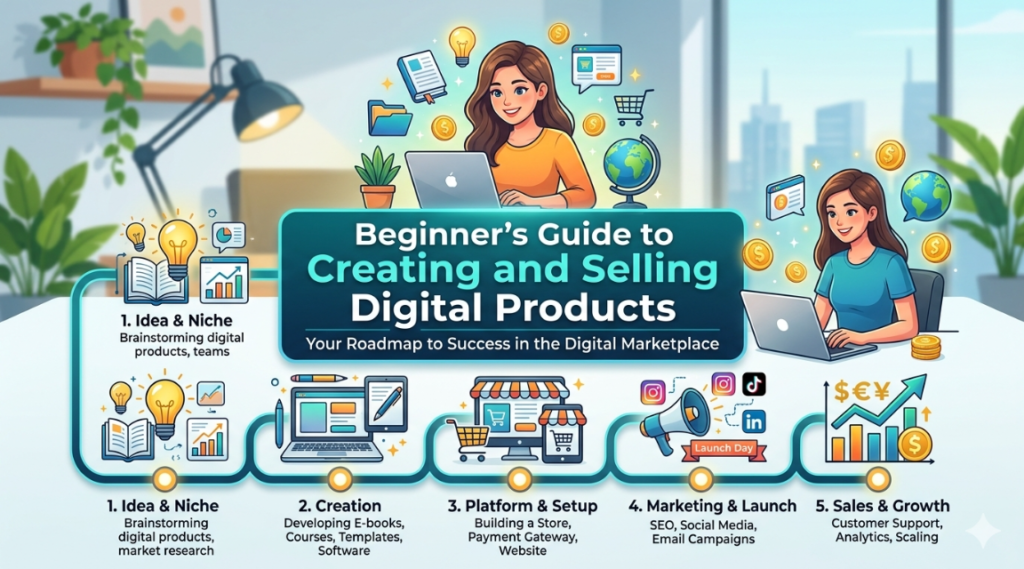
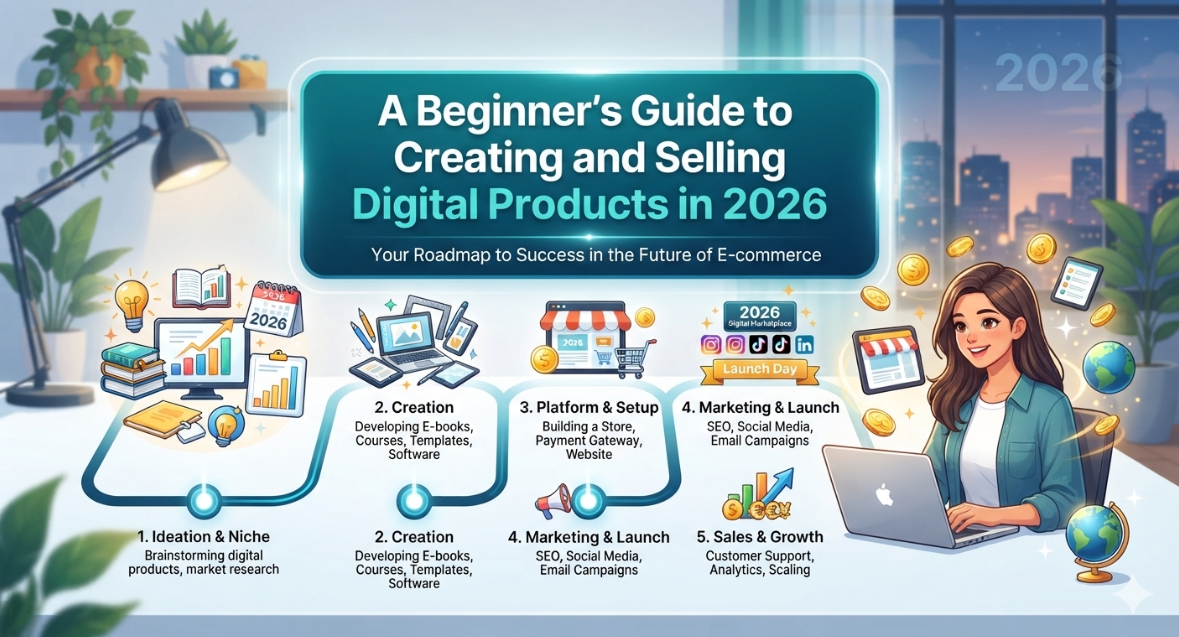
In today’s fast-paced economy, the online creator space is evolving at an unprecedented speed. Whether you are an entrepreneur, creator, freelancer, or small business owner, transitioning into digital assets offers incredible high profit margins, zero physical inventory hassles, and unlimited international scalability. However, building a digital product is only half the battle; knowing how to optimize, structure, market, and refine your products based on market demand is what separates high earners from the rest. Following A Beginner’s Guide to Creating and Selling Digital Products will give you a clear, structured roadmap to successfully navigate this competitive market and turn your digital assets into a profitable business
If you are looking for a complete roadmap to design, launch, and monetize your digital assets, this beginner’s guide to creating and selling digital products covers every actionable step you need to build a sustainable digital business in 2026.
Understanding Digital Products: The Ultimate Beginner Overview
Before diving into creation, it is crucial to understand what makes digital items so attractive compared to traditional physical goods. A digital product is an intangible asset or piece of media that can be sold, distributed, and used repeatedly online without needing physical inventory replenishment.
The global e-learning and digital asset market continues to hit new record heights. As highlighted in A Beginner’s Guide to Creating and Selling Digital Products, creators are increasingly shifting away from physical goods due to high efficiency and low risk. Understanding these core industry shifts is an essential step in A Beginner’s Guide to Creating and Selling Digital Products for anyone looking to build a profitable online business.
- Minimal Overhead Expenses: You do not need storage units, shipping carriers, or complex supply chain logistics.
- Passive Income Scalability: Once a product is created, selling 10 copies or 10,000 copies requires practically the same operational effort.
- Instant Delivery: Buyers receive immediate access upon purchase, leading to higher customer satisfaction.
- Massive Profit Margins: Beyond initial software fees and payment processor charges, most revenue goes directly to your profit margins.
       ┌──────────────────────────────────────────────────────────┐
       │                DIGITAL PRODUCT ADVANTAGES                │
       └────────────────────────────┬─────────────────────────────┘
                                    │
         ┌──────────────────────────┼──────────────────────────┐
         ▼                          ▼                          ▼
┌──────────────────┐       ┌──────────────────┐       ┌──────────────────┐
│ Zero Inventory   │       │ Global Scalability│       │  90%+ Profit     │
│ & Shipping Costs │       │ Sell Anywhere 24/7│       │    Margins       │
└──────────────────┘       └──────────────────┘       └──────────────────┘
Choosing Profitable Products: A Beginner’s Guide to Creating and Selling Digital Products
The foundation of any successful digital business is identifying what your target audience actively wants and is willing to buy. Do not create products based solely on personal assumptions; create products that solve concrete problems.
1 Top Digital Product Ideas for Beginners in 2026
To give you a head start, here are the most requested and profitable digital product categories dominating the market this year:
2 Educational E-books and Niche Guides
E-books remain one of the easiest entry points for beginner creators. If you possess specialized knowledge in a specific area—such as fitness routines, coding basics, or financial management—packaging that expertise into a PDF guide or interactive e-book offers immediate value.
3 Digital Templates, Spreadsheets, and Design Assets
People love saving time. Productivity templates like Notion dashboards, customizable Canva templates, automated Excel spreadsheets, or website themes allow buyers to bypass hours of technical setup.
Online Courses and Exclusive Communities
If your topic requires visual explanations, structured video courses combined with private creator communities (hosted on platforms like Skool or Circle) represent high-ticket digital products with long-term retention.
Micro-SaaS, Web Tools, and AI Prompts
With the rapid expansion of AI technology, creators are finding huge success selling organized AI prompt libraries, lightweight web tools, custom GPT extensions, or automation workflows.
Step-by-Step Production: A Beginner’s Guide to Creating and Selling Digital Products
Creating a high-converting digital product requires a structured step-by-step approach. Follow this workflow to transform your initial idea into a market-ready asset.
┌─────────────────┐     ┌─────────────────┐     ┌─────────────────┐     ┌─────────────────┐
│  1. Validate    │────>│  2. Outline &   │────>│  3. Design &    │────>│  4. Package &   │
│  Market Demand  │     │  Build Content  │     │  Format Asset   │     │  Secure Files   │
└─────────────────┘     └─────────────────┘     └─────────────────┘     └─────────────────┘
Validating Your Product Idea Before Building
Never spend weeks or months creating a product before validating whether people will actually pay for it.
- Keyword & Search Trend Research: Use SEO search volume tools to verify if users are actively searching for solutions in your domain.
- Community Listening: Browse Reddit forums, Quora questions, and Facebook groups to spot recurring problems and common pain points.
- Pre-Sales & Waitlists: Build a landing page to collect email signups or pre-orders before writing a single line of code or text.
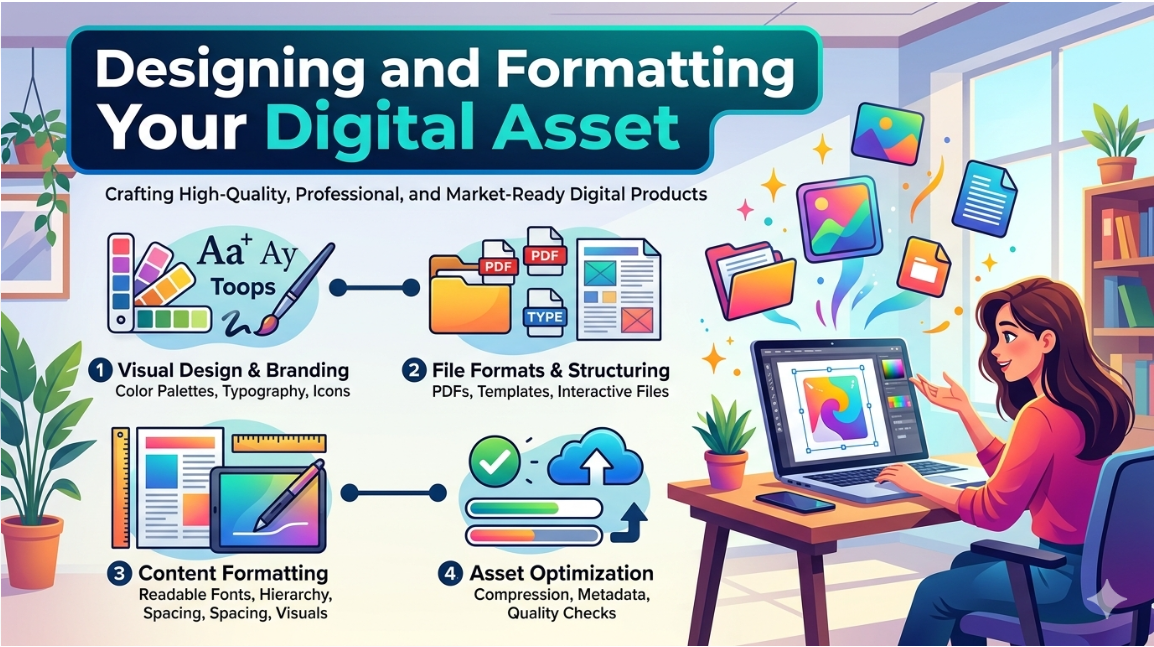
Designing and Formatting Your Digital Asset
First impressions matter. Even an information-rich product will suffer high refund rates if it looks unprofessional.
- Formatting E-books: Use tools like Canva or Adobe InDesign to ensure clean typography, clear visual hierarchy, and readable column layouts.
- Video Production: Ensure crisp 1080p/4K recording and clear audio using external microphones.
- File Organization: Deliver zip files containing organized subfolders, clear PDF instructions, and troubleshooting guides.
Selecting Sales Platforms: How to Sell Your Digital Products
Once your digital files are finalized, you need a reliable platform to handle checkout processing, automated file delivery, and tax compliance.
| Platform Type | Top Examples | Best For | Key Benefits |
| Hosted Marketplaces | Gumroad, Lemon Squeezy, Payhip | Beginners, Solo Creators | Zero monthly fees, built-in affiliate systems, automated tax collection. |
| E-Commerce Builders | Shopify, WooCommerce | Established Brands | Full custom domain control, deep branding customization, advanced cross-sells. |
| Niche Marketplaces | Etsy, Creative Market | Designers, Craft Creators | Built-in search traffic, active shoppers, existing audience base. |
Integrating Customer Feedback: A Beginner’s Guide to Creating and Selling Digital Products
Creating and launching your product is only the initial phase. The secret behind scaling a single digital item into a recurring revenue stream lies in continuous improvement through customer feedback. Listening to actual buyers transforms a basic product into an industry standard.
       ┌──────────────────────────────────────────────────────────┐
       │                THE CONTINUOUS FEEDBACK LOOP              │
       └────────────────────────────┬─────────────────────────────┘
                                    │
         ┌──────────────────────────┼──────────────────────────┐
         ▼                          ▼                          ▼
┌──────────────────┐       ┌──────────────────┐       ┌──────────────────┐
│  Gather Direct   │────>  │ Analyze Metrics  │────>  │ Ship Product     │
│ User Feedback    │       │ & User Friction  │       │ Updates & Fixes  │
└──────────────────┘       └──────────────────┘       └──────────────────┘
Understanding Customer Needs and User Preferences
Direct customer feedback gives you clear insights into user habits and expectations. Rather than guessing what upgrades to work on next, direct input allows you to prioritize features that deliver immediate utility.
- Actionable Steps: Deploy post-purchase surveys using automated email flows 7 to 14 days after purchase to assess user satisfaction.
Identifying Bugs and Technical Issues Early
Digital files, code templates, or web apps can encounter unexpected bugs due to operating system updates or software updates.
- Actionable Steps: Provide a dedicated support email or ticketing system inside your digital files so buyers can flag technical issues quickly before leaving negative reviews.
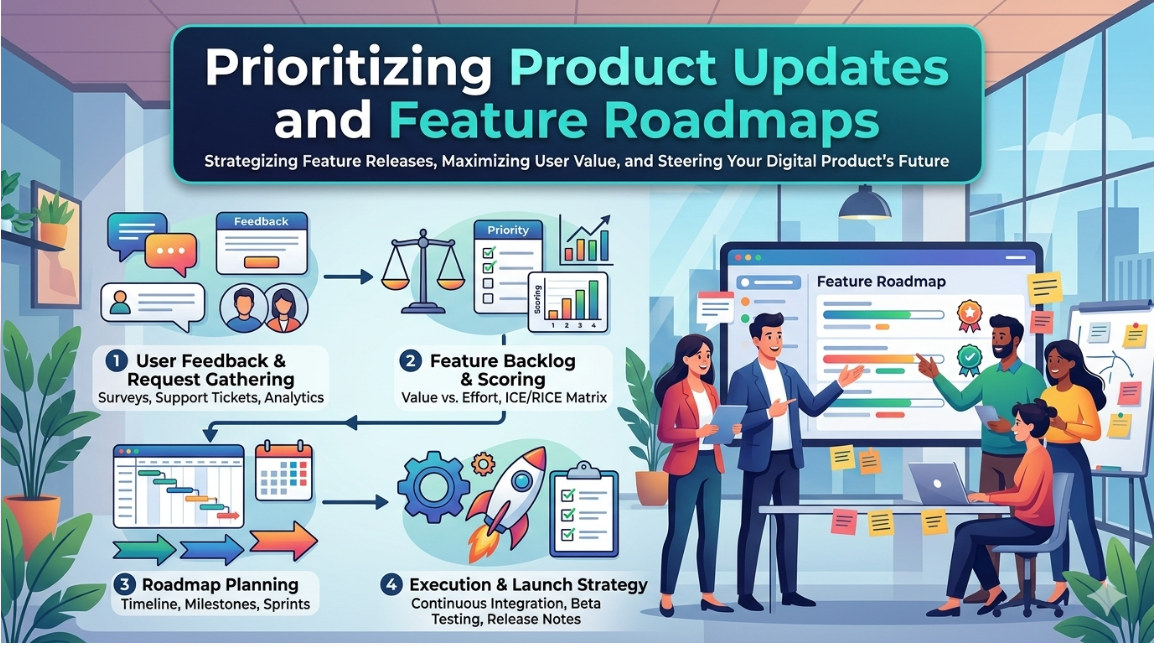
Prioritizing Product Updates and Feature Roadmaps
A static digital product quickly becomes obsolete. Use customer suggestions to guide your feature updates and release v2.0 or v3.0 editions.
- Actionable Steps: Use public feature-voting tools or community message boards where customers can vote on upcoming updates.
Enhancing User Experience (UX) and Interface (UI) Design
If an e-book is visually cluttered or a template structure is confusing, customers will become frustrated. Feedback highlights where navigation breaks down and helps you streamline the onboarding workflow.
- Actionable Steps: Conduct screen-recorded user testing sessions or analyze user heatmaps to spot drop-off points.
Building Customer Loyalty and Brand Advocacy
When customers see that their feedback is actively implemented, they transform into loyal brand advocates who spread word-of-mouth recommendations.
- Actionable Steps: Publish clear changelogs or email newsletters highlighting specific product features added directly from buyer suggestions.
Driving Innovation and Maintaining a Competitive Advantage
In a crowded marketplace, staying still means getting left behind. Customer feedback acts as an early indicator of emerging industry trends, enabling you to build add-ons, upsells, or spin-off products before competitors do.
Marketing Strategies: Promoting Your Digital Products for Sales
Having a great digital product means nothing if nobody knows it exists. You need an aggressive, omni-channel marketing strategy to generate consistent organic and paid traffic.
┌─────────────────────────────────────────────────────────────────┐
│                    TRAFFIC GENERATION FUNNEL                    │
└────────────────────────────────┬────────────────────────────────┘
                                 │
         ┌───────────────────────┼───────────────────────┐
         ▼                       ▼                       ▼
┌─────────────────┐     ┌─────────────────┐     ┌─────────────────┐
│ Search Engine   │     │  Short-Form     │     │ Lead Magnets    │
│ Optimization    │     │  Video Content  │     │ & Email Funnels │
└─────────────────┘     └─────────────────┘     └─────────────────┘
Search Engine Optimization (SEO) and Content Marketing
Target high-intent search keywords related to your product category. Publish detailed tutorials, comparisons, and “how-to” articles (like this beginner’s guide to creating and selling digital products) to capture organic search traffic.
Leveraging Short-Form Video Content
Platforms like TikTok, YouTube Shorts, and Instagram Reels offer insane organic reach. Post micro-tutorials, behind-the-scenes creation clips, and quick problem-solving videos to convert casual viewers into customers.
Building an Email List with High-Value Lead Magnets
Social media algorithms change constantly; your email list is an asset you own. Offer a free sample (e.g., a mini PDF, a free template, or a cheat sheet) in exchange for email addresses, then nurture those leads with automated sales sequences.
Conclusion
Mastering this beginner’s guide to creating and selling digital products is one of the most reliable ways to achieve online independence, location freedom, and scalable passive income in 2026. Focus on identifying a genuine audience problem, build a high-quality product, select the right ecommerce platforms, and systematically refine your offering using structured customer feedback.
Start small, validate your concept quickly, and begin building your digital product business today!