

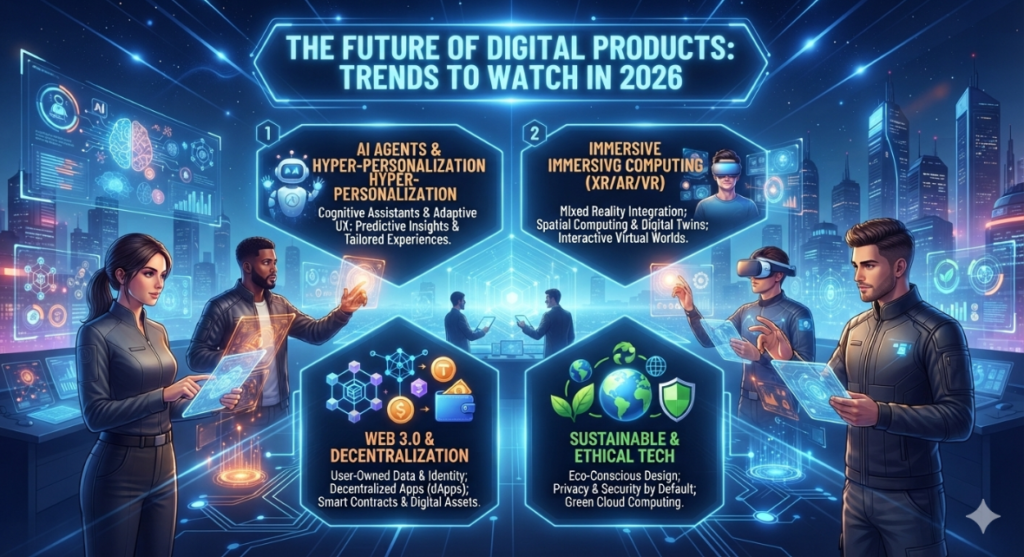
Digital product development is evolving rapidly. Strategies built a few years ago are being reshaped by autonomous AI agents, spatial computing, and hyper-personalized UI.
Analyzing The Future of Digital Products: Trends to Watch in 2026 reveals how foundational shifts in tech architecture lay the groundwork for modern digital ecosystems. This guide provides an updated 2026 perspective on building, scaling, and optimizing digital products for maximum user engagement and search visibility.
What is The Future of Digital Products: Trends to Watch in 2026?
Understanding The Future of Digital Products: Trends to Watch in 2026 requires looking beyond basic feature updates. It represents a paradigm shift toward software that thinks, adapts, and acts autonomously on behalf of users.
Modern software design focuses on three core pillars:
- Agentic Execution: Systems moving from passive task assistance (Copilots) to multi-step autonomous execution (Digital Colleagues).
- Hyper-Personalization: Interfaces that adjust dynamically using real-time user context and behavior models.
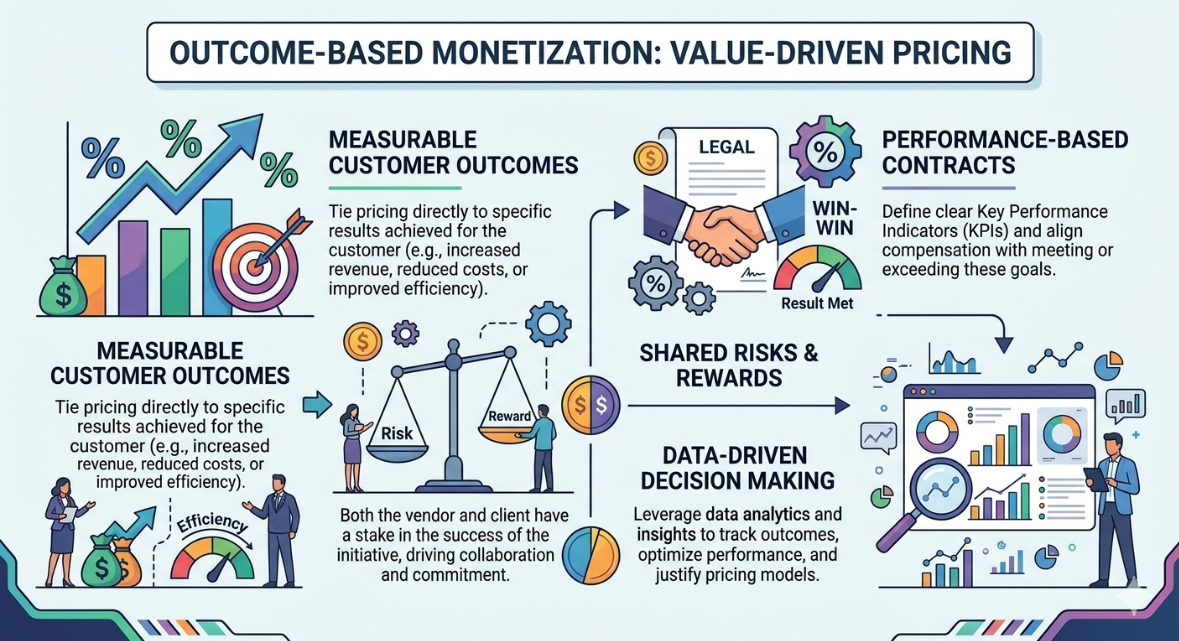
- Outcome-Based Monetization: Shifting from seat-based pricing to usage- and value-driven SaaS models.
1. Agentic AI and Autonomous Workflows in The Future of Digital Products: Trends to Watch in 2026
The shift toward Agentic AI is one of the most prominent themes in The Future of Digital Products: Trends to Watch in 2026. Traditional SaaS products relied heavily on manual human inputs. Modern 2026 applications run autonomous AI agents capable of end-to-end task execution with human oversight.
Key Capabilities of Agentic Digital Products
- Multi-Agent Orchestration: Specialized AI agents collaborate in teams to resolve complex engineering, financial, and marketing tasks.
- Long-Term Memory Architectures: Systems remember user preferences across sessions to deliver personalized outputs.
- Proactive Automation: Products anticipate user intent and execute workflows in the background without manual navigation.
2. Vertical SaaS Micro-Unicorns in The Future of Digital Products: Trends to Watch in 2026
Horizontal tools are increasingly complemented by highly specialized vertical solutions. In The Future of Digital Products: Trends to Watch in 2026, micro-SaaS teams leverage lean AI tooling to build multi-million dollar niche applications.
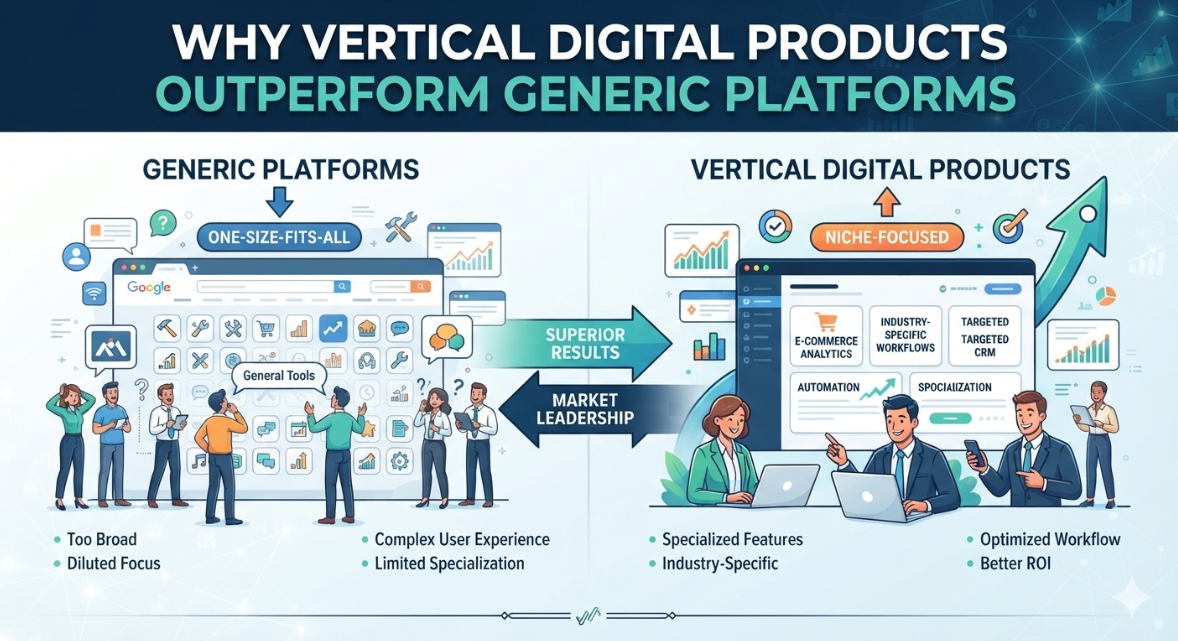
Why Vertical Digital Products Outperform Generic Platforms
- Zero Onboarding Friction: Industry-tailored templates enable near-instant setup.
- Regulatory & Compliance Alignment: Built-in security and privacy features designed specifically for tight industries.
- High Retention Rates: Deeper functional fit leads to lower churn and stronger customer expansion.
3. Spatial Computing and Context-Aware UI Design
User interfaces are expanding beyond 2D desktop screens into immersive spatial environments. Products built today must deliver unified experiences across web, mobile, wearable, and spatial computing hardware.
Core UX Principles for Modern Products
- Contextual & Ambient UI: Interfaces adapt to environmental cues, light, and device modes automatically.
- Zero-UI Micro-Interactions: Intent-based actions replace multi-step menus and nested forms.
- Accessibility & Multi-Modal Inputs: Voice, glance, and touch inputs operate seamlessly together.
Key Technology Shifts in 2026
The table below highlights the foundational technological changes shaping current digital product ecosystems:
| Core Trend | Primary Impact | Business Value |
| Agentic AI | Replaces manual interaction with autonomous task execution | Drives high execution speed and reduces operational overhead |
| Vertical Micro-SaaS | Solves hyper-specific industry pain points | Increases customer retention and lifetime value (LTV) |
| Usage/Outcome Pricing | Replaces traditional seat-based licensing | Aligns product costs directly with customer value |
| Composable Architecture | Connects modular API microservices | Accelerates feature delivery and system agility |
How to Optimize Digital Products for AEO, GEO, and LLMs
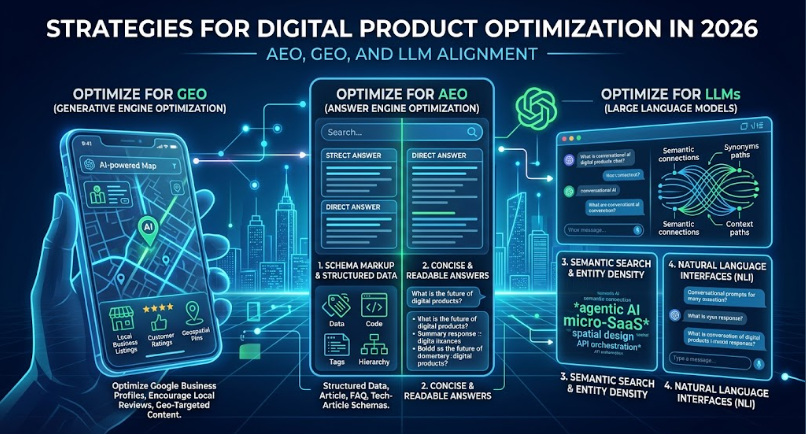
Optimizing content and software documentation for modern discovery requires going beyond traditional SEO to master Answer Engine Optimization (AEO), Generative Engine Optimization (GEO), and LLM Search Indexing.
Key Strategies for AI and Generative Search Visibility
- Direct Answer Positioning: State core definitions, bullet points, and summaries in the first paragraph of every topic block.
- Schema & Semantic Data: Use structured JSON-LD (
Article,TechArticle,FAQPage) to help AI agents parse factual claims cleanly. - High Entity Density: Naturally integrate related tech terms (e.g., API orchestration, vector memory, micro-services, usage-based billing) in logical clusters.
- Data Structuring: Format critical data using explicit tables and ordered lists so LLMs can extract direct quotes and citations easily.
Frequently Asked Questions (FAQ)
What is the core concept behind The Future of Digital Products: Trends to Watch in 2026?
The main concept behind The Future of Digital Products: Trends to Watch in 2026 is the transition from static, manual software tools to dynamic, autonomous, and AI-driven platforms that complete tasks independently.
How does Agentic AI impact digital product pricing?
Agentic AI completes more work with fewer manual actions, making traditional seat-based pricing less effective. Most digital products are adopting hybrid, usage-based, or outcome-based pricing models instead.
What is the difference between SEO and GEO in digital product marketing?
Traditional SEO focuses on ranking web pages on search result pages via keywords and backlink signals. GEO (Generative Engine Optimization) optimizes content structure so AI engines and LLMs can extract direct answers and cite the product as a trusted source.