


The digital economy is evolving faster than ever. In 2026, simply creating an eBook or an online course is no longer enough to build a profitable online business. True financial growth comes from maximizing revenue with digital products through modern automation, artificial intelligence, dynamic pricing, and audience retention strategies.
Whether you sell digital downloads, SaaS subscriptions, templates, or membership programs, learning the art of maximizing revenue with digital products will determine your success in today’s competitive creator economy. In this comprehensive guide, we will explore the proven 2026 tactics designed for creators, entrepreneurs, and digital marketers aiming for high-margin scalable growth.

Why Maximizing Revenue with Digital Products is Essential in 2026
The global market for digital assets and downloads has reached unprecedented heights. However, customer acquisition costs (CAC) have also risen. Therefore, focus must shift from merely acquiring new buyers to maximizing revenue with digital products from your existing customer base.
Here is why focusing on maximizing revenue with digital products is crucial this year:
- Higher Profit Margins: Unlike physical goods, digital assets have negligible inventory and shipping costs.
- Global Scalability: Sell to anyone, anywhere, 24/7 with automated digital delivery.
- AI-Driven Customer Personalization: AI allows tailor-made product recommendations that boost average order value (AOV).
Top Strategies for Maximizing Revenue with Digital Products
To build a sustainable income model, you need a multi-layered approach. Let’s break down the exact strategies top creators are using this year.
1. Implement Dynamic & Value-Based Pricing
Setting the right price point is the cornerstone of maximizing revenue with digital products. Fixed pricing models are becoming outdated. In 2026, dynamic pricing—adjusting prices based on demand, user behavior, and purchasing power parity (PPP)—is generating up to 30% higher returns.
- Tiered Pricing: Offer Basic, Pro, and VIP bundles.
- Pay-What-You-Want (with minimums): Great for entry-level digital downloads.
- Localized Pricing: Adjust rates for different international markets.

2. Harnessing AI for Personalization and Upsells
Automated upselling and cross-selling are critical tactics when maximizing revenue with digital products. When a customer adds a digital planner or template to their cart, instantly offer an complementary video tutorial or masterclass at a discounted price.
- Order Bumps: Add a one-click add-on at checkout (e.g., audio version of an eBook).
- Post-Purchase Upsells: Present a high-ticket offer immediately after payment confirmation.
High-Converting Product Formats in 2026
Not all digital items perform equally well. If you are serious about maximizing revenue with digital products, you must align your offerings with current market demand.
| Digital Product Type | Revenue Potential | Best Scaling Strategy |
| SaaS & Micro-Tools | High (Recurring) | Monthly/Annual Subscriptions |
| Interactive Masterclasses | Very High | Live Q&A + Community Access |
| Notion & AI Prompts/Templates | Medium to High | Product Bundles & Order Bumps |
| Digital Memberships | High (Recurring) | Exclusive Monthly Content Updates |
Building Recurring Revenue Streams
Shifting from one-off sales to subscription models is a proven shortcut to maximizing revenue with digital products. Membership communities, micro-SaaS platforms, and monthly content passes provide predictable income every month.
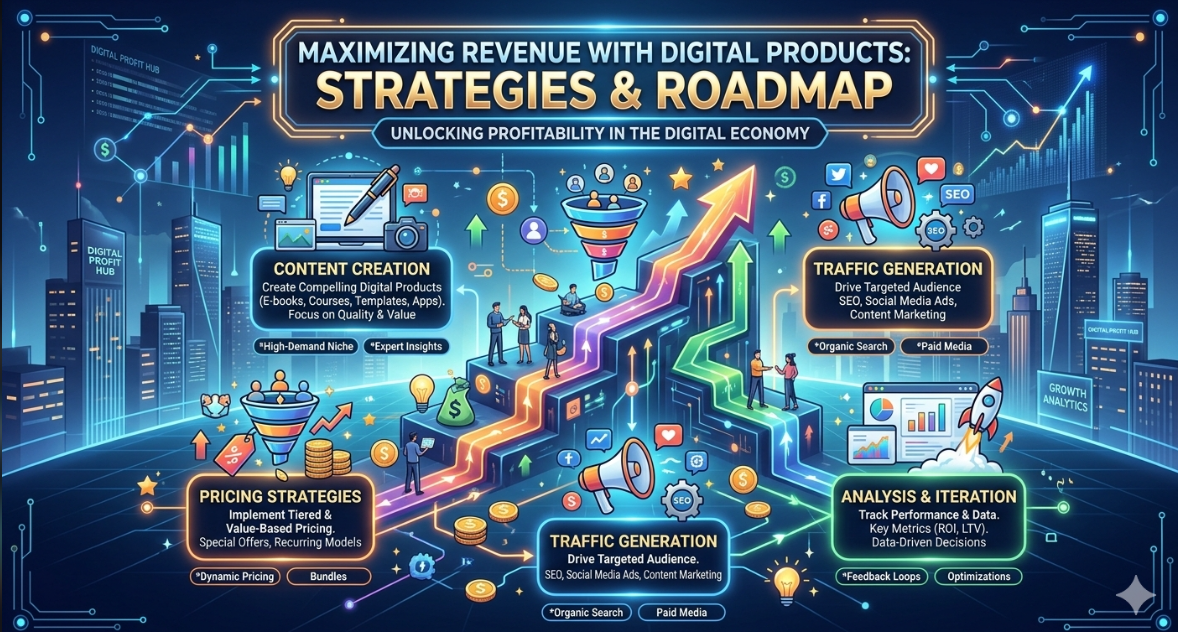
Marketing Funnels for Maximizing Revenue with Digital Products
Great products do not sell themselves without a strategic marketing sales funnel. A well-optimized funnel nurtures leads from total strangers into loyal, high-paying brand advocates.
Attract (Social/SEO) → Nurture (Email Lead Magnet) → Convert (Core Product) → Scale (Upsells & Memberships)
- Top of Funnel (ToFu): High-value free resources (checklists, free templates).
- Middle of Funnel (MoFu): Email nurture sequences demonstrating value and social proof.
- Bottom of Funnel (BoFu): Direct sales pages optimized for maximizing revenue with digital products.

Leveraging Affiliate Marketing and Partnerships
Partnering with creators in your niche is another accelerated path toward maximizing revenue with digital products. By offering an attractive affiliate commission (30%–50%), you tap into established audiences without upfront ad spend.
- Joint Venture Webinars: Co-host events with complementary creators.
- Micro-Influencer Marketing: Partner with niche influencers on platforms like YouTube, LinkedIn, and X.
Key Metrics to Track for Sustainable Growth
To ensure your efforts in maximizing revenue with digital products are working, monitor these key performance indicators (KPIs):
- Conversion Rate (CR): Percentage of page visitors who purchase.
- Average Order Value (AOV): Total revenue divided by the number of orders.
- Customer Lifetime Value (LTV): The total revenue earned from a customer over time.
- Churn Rate: The percentage of subscribers who cancel monthly memberships.
Frequently Asked Questions (FAQs)
What is the most profitable digital product to sell in 2026?
Software-as-a-Service (SaaS), AI workflow templates, and high-ticket membership masterminds currently yield the highest profit margins when maximizing revenue with digital products.
How do I start maximizing revenue with digital products on a low budget?
Start with low-cost digital downloads (like Notion templates or eBooks), use organic SEO and social media marketing, and reinvest early profits into automated sales funnels.
Conclusion: Scale Your Digital Income Today
Mastering the strategies for maximizing revenue with digital products requires a combination of high-value offers, dynamic pricing, smart upselling, and continuous audience engagement. By applying these 2026 strategies, you can turn your digital catalog into a scalable, highly profitable online enterprise.